




The cryptocurrency market is on the rise, with potential investors and crypto enthusiasts trying to participate in the market and its gains. In addition to the volatility of several cryptocurrencies, the fierce competition requires interested individuals to have enough knowledge about the market and its systems to avoid incurring more losses than wins.
Although Bitcoin is the most popular among the cryptocurrencies, there are other unique options that investors can try. This article will guide you through one of these options, Ethereum, including its history and features that differentiate it from other cryptocurrencies. Later in the article, we will also be looking at Ethereum 2.0.
What is Ethereum?
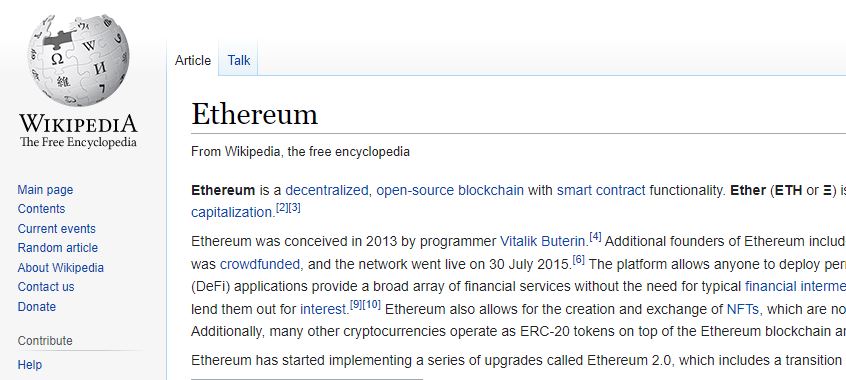
Ethereum went live in 2015 under the supervision of its founder, Vitalik Buterin. At the age of 17, in 2012, Vitalik’s father introduced him to Bitcoin, and since then, his interest in its technology only grew. Vitalik wrote for Bitcoin Magazine, suggesting improvements for Bitcoin’s platform, before making his cryptocurrency, Ethereum.
Vitalik Buterin main creator of Ethereum
Ever since its establishment, Ethereum has been a notable player in the cryptocurrency market and has a market capital (total value of all the Ethereum currency globally) of $40.6 billion at the time of writing in 2019.
People easily mislabel Ethereum as a cryptocurrency but it is more than that.
Ethereum is a distributed, open-source (public) blockchain that features smart contract scripting functionality.
The purpose of Ethereum is to give power back to users from centralised systems. Using blockchain technology, Ethereum replaces the centralised systems that store people’s data. These centralised computing systems such as Google and Apple regulate apps on their app stores, restricting other developers. The main issue with centralised systems is that one body controls the entire system, presenting a single failure point. This single point of failure serves as the primary target for malicious entities, and if the single point fails, the whole system fails.
Ethereum provides a distributed app store, leveraging on the blockchain, and thus empowering the users. With this decentralisation feature on the app store, only users can modify their apps and access their personal information. There are no regulations imposed on them, neither is any of their information stored.
Features Of Ethereum
Ether (ETH)
This is Ethereum’s native cryptocurrency and is equivalent to Bitcoin. Ethereum rewards miners with ethers for performing computations. This helps to power the Ethereum network and keep it running.
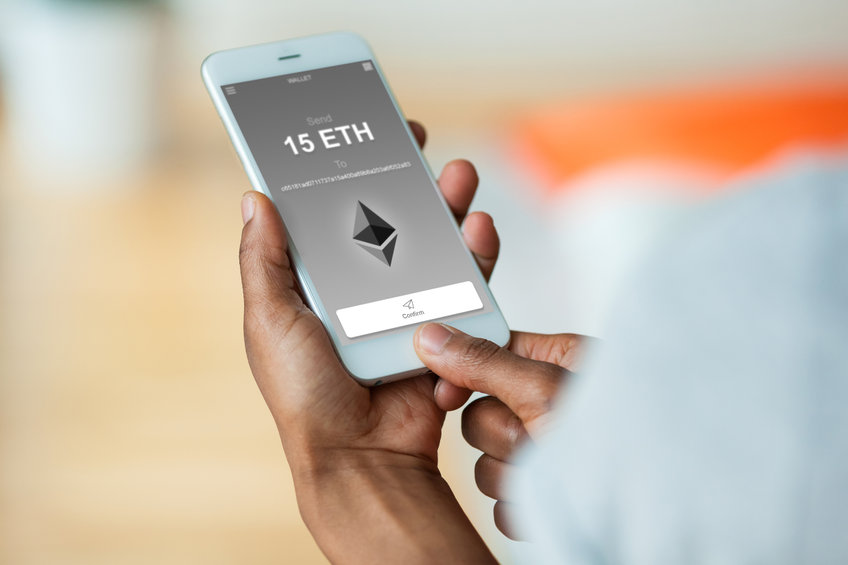
With Ether, you can control your funds without the involvement of any third-party. It is secured by cryptography, ensuring not only the safety of your e-wallet but also your transactions. You can transfer ETH with peers without go-betweens from anywhere, at any time. Like Ethereum, it is decentralised, meaning that no organisation or bank can print more ETH or modify its terms. It is also available to anyone. ETH can be used as collateral for crypto loans or even a form of investment, like other cryptocurrencies.
Smart Contracts

One of the several ways that Ethereum uses blockchain technology is by securing and validating the transactions made in ETH with smart contracts.
Smart contracts automatically process actions, including transactions, once the involved parties reach an agreement. They ensure that users have reliable transactions, and involve parties that cannot back out on the agreed terms. Ethereum requires users who want to run activities using smart contracts to pay a fee, depending on the computing power needed to run these activities.
Talking about cryptocurrencies and how they come about, let us take a look at ICOs.
Initial Coin Offerings (ICOs)
Initial Public Offerings (IPOs) are to fiat currency market what Initial Coin Offerings (ICOs) are to the cryptocurrency market. Let’s say you plan to start a new cryptocurrency and have a great idea that you plan to implement in the system. An ICO is a way to raise funds to facilitate the creation of this cryptocurrency.
ICOs enable interested investors to buy into that offering and receive the new cryptocurrency token which the company that is running the ICO issues. Investors buying into the offering do so with the mind that they generate value as time goes on. The token can serve as a payment for a service that the company offers, a product, or even a stake in the company or crypto project.
ICOs come at high risks. Although there have been enormous returns for some investors that partook in some ICOs, several other ICOs either turned out to be frauds, failed or did not perform well.
If you want to participate in an ICO, you have to purchase a digital currency initially. You must have a basic understanding of how cryptocurrency wallets and exchanges work.
Apart from the company in charge of the offering, ICOs are unregulated. hlHence, you must research and investigate the company if you wish to invest in any. Participate in an ICO with high caution and ensure that everything is right. You can check forums and talk to experienced cryptocurrency investors to assess the legitimacy of the ICO.
All this talk about decentralisation, cryptocurrencies and ICOs does make you wonder about the concept of decentralised finance, doesn’t it?
Decentralised Finance (DeFi)

Decentralised Finance or DeFi, for short, is a general term for various financial applications in cryptocurrency or blockchain to disrupt financial intermediaries. It gets inspiration from blockchain as it aims towards systems that are not controlled by a single central entity. Rather than letting users have less power over their money, as with centralised systems, DeFi gives users more direct control over their cash and ensures faster transaction speeds.
DeFi broadens blockchain application using financial elements ranging from straightforward transactions to highly complex financial situations. In addition to direct transactions, DeFi cuts the middlemen out of crowdfunding, getting loans, insurance and more financial applications.
A majority of the DeFi applications are based on Ethereum because of its unique nature. Ethereum distinguishes itself from Bitcoin with its convenience and the ease of using it to further decentralised applications than simple transactions. The ease of building decentralised applications with Ethereum is majorly due to its smart contacts feature, which automatically executes transactions when certain conditions are met, thereby granting more flexibility to users. However, that is not all. As Ethereum improves continuously, there is a version 2.0.
Ethereum 2.0
This is an upgrade to the Ethereum network aimed at resolving the networks issues with scalability and security. One of the most notable changes is the switch from a Proof of Work consensus mechanism to a Proof of Stake model.
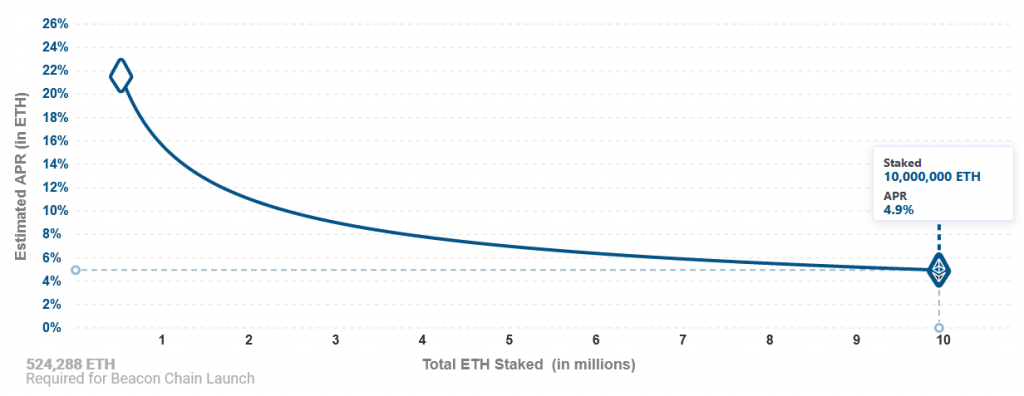
The Ethereum 2.0 upgrade aims to enhance the speed, efficiency, and scalability of the Ethereum network to enable it to process more transactions and ease bottlenecks.
Ethereum’s network move to staking is set to increase its efficiency and security. The proof of stake model enables transaction validators to stake crypto for the right to verify a transaction, instead of miners. The model selects validators to propose a block based on how much crypto they hold and how long they have owned it. When enough validators verify that they have seen the block, it is added to the blockchain, and validators get rewards for a successful block proposition.
Conclusion
The significant advantage of the Proof of Stake model is it’s higher efficiency. It does not require as much computing power as the Proof of Work consensus mechanism does. Hence, more users can participate in the blockchain. Ethereum 2.0 promises up to 100,000 transactions per second, enormously increasing the scalability of Ethereum 1.0
✅ Ethereum — The Programmable Supercomputer of Finance (Updated 2026)
Since its launch in 2015, Ethereum has evolved far beyond a simple cryptocurrency. While Ether (ETH) remains a tradable digital asset, Ethereum’s true power lies in its role as a global, decentralized programmable supercomputer — a platform for finance, apps, identity, and digital assets.
🚀 Lower Fees Through Layer-2 Scaling
Ethereum’s ongoing upgrades — especially proto-danksharding (EIP-4844) and the Dencun and Pectra improvements — dramatically cut the cost of using the network. They introduced “blobs” (special temporary data storage) that make it much cheaper for Layer-2 networks to post transaction data to Ethereum, reducing overall user fees and congestion.
Layer-2 rollups like Arbitrum, Optimism, zkSync and others shoulder much of the execution work, leaving Ethereum’s base layer to secure and settle transactions more efficiently.
This system lets Ethereum scale to thousands of transactions per second with far lower fees, closer to what users expect from high-performance networks — all while preserving decentralization.
📉 Real-World Adoption Through ETFs
Institutional interest in Ethereum has surged with the launch of Ethereum Exchange-Traded Products (ETPs/ETFs). These funds allow regulated investors to gain exposure to Ether through traditional markets, bringing billions of dollars in inflows and boosting confidence in Ethereum’s long-term utility.
Beyond speculative trading, ETFs help bridge traditional finance with decentralized finance (DeFi), making Ethereum part of mainstream investment portfolios.
🔒 Zero-Knowledge (ZK) Tech & Built-In Privacy
Ethereum is deeply integrating zero-knowledge proofs (ZK-proofs) — advanced cryptography that can verify correctness without revealing underlying data.
This technology:
- Lowers fees by reducing the work validators must do,
- Boosts scalability by enabling more efficient proof verification,
- Enhances privacy for future transactions and contracts.
Native ZK-EVMs (zero-knowledge Ethereum Virtual Machines) are being integrated directly into Ethereum’s core, allowing Ethereum itself to verify blocks using ZK proofs rather than relying entirely on Layer-2s.
Upcoming upgrades in 2026 like Heze-Bogota aim to bring deeper privacy and censorship resistance to the network.
🪙 Tokenizing Everything
Ethereum’s smart contracts support tokenization of digital and real-world assets:
- Stablecoins like USDC and USDT power much of DeFi.
- Major institutions are issuing tokenized securities, funds, and Treasuries on Ethereum.
- Real-world assets (RWAs) — from real estate to corporate debt — are being represented as tokens.
This shift turns physical financial markets into programmable, tradable assets on Ethereum, vastly expanding its economic reach.
🧠 The “World Computer” / Supercomputer Vision
Ethereum isn’t just a blockchain — it’s often described as a decentralized world computer because:
- It runs smart contracts — immutable programs that execute automatically.
- It hosts the largest ecosystem of decentralized apps (dApps) — from decentralized exchanges (DEXs) and lending markets to games and identity systems.
- It provides a platform where developers everywhere can deploy code that runs without censorship or central control.
Looking forward, Ethereum’s roadmap includes upgrades like Verkle Trees (making nodes lighter and more decentralized), full danksharding (vastly cheaper data capacity), and account abstraction (easier wallets and UX).
Together, these changes make Ethereum not just faster and cheaper, but more capable — a backbone for decentralized finance, tokenized economies, and digital coordination across industries.
