









They are not connected to some form of reserve, but use an algorithm or other method for this instead. The coins are issued or purchased on the open market, depending on the current price. This leads to a counter-regulation so that it is possible to keep the price as constant as possible.
Centralized and Decentralized Exchanges
Centralized Exchange- Each exchange of this sort has its own order book and uses its own software and servers to accept and review all trade orders and match them accordingly. In brief, an internal closed system processes the order.
Decentralized Exchange-Naturally decentralized exchanges run on a computer network instead of depending on their own servers. Decentralized exchanges may either use smart contracts or use second-layer networks of trusted nodes called relayers to scan and match orders.
Centralized Exchange
Today, the primary reason most exchanges are centralized is that they are user-focused. These exchanges are very easy to use, have a much lower learning curve and provide their crypto coins with greater liquidity.
These are more customer-focused because the individuals who operate these exchanges are in for gain, and will usually have a dedicated support staff for users. They keep adding more features frequently and upgrading them for a better user experience. And undeniably, centralized cryptocurrency exchanges are bound to have a certain level of transparency to solve any problem owing to the profit-making nature and operation.
We all know about some famous centralized exchanges such as these:
- Binance
- Coinbase
- Bitfinex
- FTX
- Celsius
- Kraken
Concerns with Custodial Centralized Exchanges

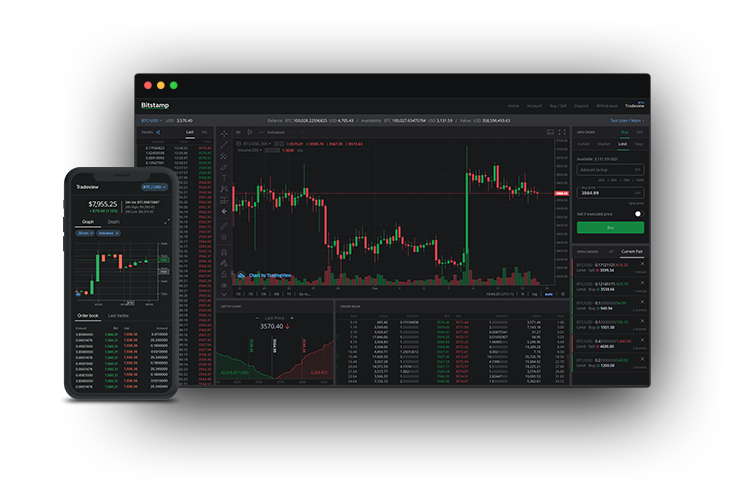
Although custodial exchanges take away the custody of your coin, it implies that they are responsible for protecting your fund, not you. The simplicity of use is the most important value it provides in return. You can enter your wallet by simply authenticating your username and password, instead of securing a private key, which can be a tedious task. This has raised some serious concerns, combined with the immature state of control, as most of these custodial exchanges are centralized. They will wipe out the funds of their users until a hacker gets hold of the private key to the exchanges. For this reason, a cold storage system has been used by centralized exchanges to hold the majority of funds there, but the fault remains.
What are the advantages non-custodial exchanges offer?
As the users hold their own money, not the exchange, your funds will still be accessible to you as a trader. This also means that more privacy and more security are provided by these exchanges. Another benefit they enjoy is that they typically need less help for protection than forms of custodial.
Users deposit their coins into smart contracts that do not have private key control (make sure they have been audited by a respected blockchain security firm). Therefore, any hack is very unlikely to occur, thereby preventing counterparty risk.
Non-custodial transactions are considered as the most reliable trading platforms by many in the crypto space. Nevertheless, there are downsides as well. You have to take care of your own funds, and these types of exchanges have little to no customer service available. The facility to convert fiat currency to crypto currency is not provided by non-custodial exchanges. This has sparked numerous attempts to peg the dollar to a cryptocurrency.
Every exchange now has four core functions: capital deposits, order books, order matching and asset exchange. Now, if you want a completely decentralized exchange (DEX), then you’ve got to decentralize each of these functions.
Some of those decentralized exchanges and protocol are:
- Binance Dex
- Uniswap
- Bisq
- Pancakeswap
- DYDX
- Sushiswap
- 1inch
Types of Decentralized Exchanges

Based on the way they trade currencies, there are two types of decentralized exchange models: currency-centric and currency-neutral. Notice here that, depending on how the exchange in question performs certain four main functions, both can be centralized or decentralized.
On top of a single blockchain platform like Ethereum, currency-centric exchanges are created. Traditional exchanges are constructed like that. This type of exchange is only able to escrow the currency(s) belonging to the platform on which it is installed. An Ethereum-based exchange, for example, can only escrow ERC20 assets and other related contracts.
Advantages of Decentralized Exchanges
Before authorizing you to trade, most centralized exchanges ask for a lot of your private details to sign up for your exchange account, such as your name, ID, bank account number, etc. Anonymous crypto-to-crypto exchanges often request your location information and other sensitive data in order to comply with government regulations. On the other hand, decentralized exchanges use blockchain data to work and will require only the public address in the ideal case.
Censorship Resistance


Decentralization thrives on the premise that nobody can regulate it, following up from the previous one. Unlike a centralized exchange, the government cannot control transactions nor put a tab on them, nor can decentralized exchanges forcibly enforce any taxes or other regulations.
Security


Across a network of machines, decentralized exchanges exist. Therefore, due to the lack of a single point of failure, it is much more difficult to strike. This also makes it much harder to design and test DEXs, which is one of the reasons why slow growth has been experienced by DEX development.
Privacy Anonymity


Big exchanges were under strong attacks from DDOS. Privacy is the main value DEX provides. DEX does not offer its own hot wallet; instead, other hot or cold wallets may be selected by the user and their personal wallet is fully controlled, thus eliminating their personal information from the hackers.
Downtime Zero
There is no single point of failure in DEXs, meaning that if one node or several nodes go down due to attack or maintenance work, it will be held up and running by the remaining DEX nodes. This significantly reduces the exchange downtime and enables the rollout of updates, which, by the way, occurs on a node-by-node basis.
Reduced tariffs
Another benefit of DEX is that it needs very little money for maintenance (compared to the centralized exchanges). Since there is no need to supply users with a hot wallet, the cost is greatly reduced. Decentralized exchanges still need money to support themselves, however each time a consumer transacts, this can be collected by charging a very low charge, thus complying with the original blockchain concept.
Centralized Exchanges vs. Decentralized Alternatives: A New Battleground
The crypto exchange landscape is no longer dominated solely by centralized platforms like Binance, Coinbase and Kraken. Decentralized exchanges (DEXs) are rapidly gaining traction and challenging CEXs across multiple dimensions — from fees and control to innovation and trading experience.
🔄 What’s Driving the Shift
1. Non-custodial trading & user control
On DEXs, trades are executed on-chain through smart contracts — meaning users retain ownership of their assets until the exact moment of trade. In contrast, CEXs hold custody of user funds, creating counterparty risk and exposing traders to hacks and freezes.
2. Lower fees & transparent mechanics
Because decentralized systems automate liquidity and settlement via smart contracts, many DEXs offer lower or more transparent fee structures — especially on chains optimized for fast, cheap transactions.
3. Permissionless access
Anyone with a wallet and internet connection can trade on a DEX without Know Your Customer (KYC) or identity checks, making them a go-to option for privacy-focused users and traders in underserved regions.
🦄 Uniswap: The AMM Pioneer Still Leading
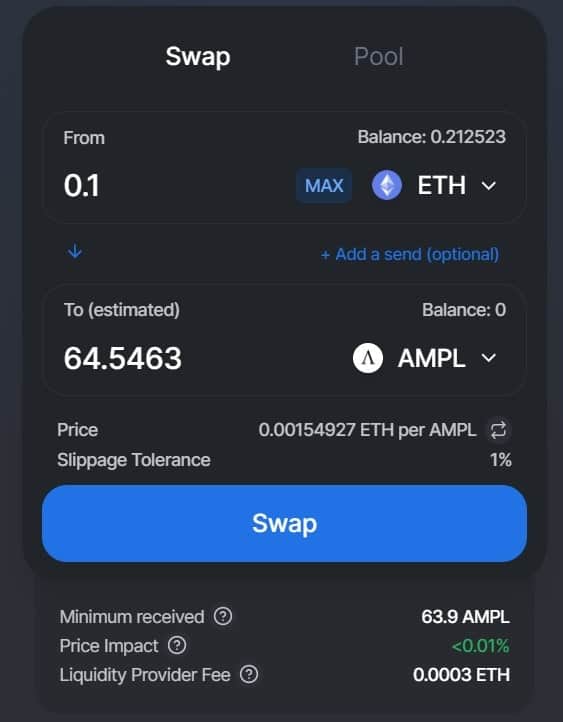
Uniswap remains one of the most widely used DEXs, with deep liquidity and an automated market-maker (AMM) design that lets anyone swap tokens or provide liquidity without intermediaries. Its continued protocol upgrades and governance evolution show how DEX infrastructure is maturing to rival traditional exchanges on features and usability.
⚔️ Perpetual DEX Wars: Hyperliquid & Aster
Decentralized perpetual derivatives platforms like Hyperliquid and Aster are especially noteworthy for pushing into territory once dominated by CEXs:
- Hyperliquid operates on a customized blockchain layer, delivering sub-second trade execution and deep liquidity — performance characteristics traditionally associated with centralized order books.
- Aster has quickly risen as a competitor with features such as MEV-free execution, hidden orders and multi-chain integration, appealing to both retail and professional traders.
Analysts describe this competition as “perpetual DEX wars,” where decentralized platforms are proving that speed, scalability and derivatives trading aren’t exclusive domains of CEXs anymore.
Solana’s DEX Ecosystem: Phantom & Raydium Taking on the CEXs
A huge part of the decentralized exchange revolution isn’t just Ethereum’s Uniswap — Solana’s ecosystem is rapidly proving that high-speed, low-fee trading doesn’t have to live on centralized platforms either. Two standout players here are Phantom and Raydium, and they’re helping push users outside the centralized exchange model.
🦊 Phantom Wallet – More Than a Wallet
Phantom has become the go-to self-custody wallet on Solana, letting users store, send, and swap assets without ever handing funds to a centralized exchange. Connecting Phantom to DEXs like Raydium, Jupiter, or Orca gives traders full control over their crypto and privacy, removing the intermediary that centralized exchanges rely on.
💧 Raydium – Solana’s Hybrid DEX Powerhouse
Raydium is one of the biggest decentralized exchanges on Solana, built as an automated market maker (AMM) that also taps into a central limit order book for deeper liquidity and better pricing — all fully on-chain. It leverages Solana’s ultra-fast throughput and super low fees to offer trading experiences that challenge centralized order books on speed, cost, and accessibility.
Key ways Raydium competes with CEXs:
- Self-custody trading: Users trade directly from wallets like Phantom with no third-party custody.
- Low-fee swaps: Trades cost fractions of a cent thanks to Solana’s infrastructure.
- Deep liquidity & order book access: Hybrid models let Raydium route through shared liquidity and limit orders, narrowing spreads and improving execution.
- Yield & incentives: Liquidity providers earn fees and protocols can bootstrap activity without centralized custody.
📊 What This Means for Centralized Exchanges
Solana-centric DEXs — powered by wallets like Phantom and protocols like Raydium — highlight a big shift in trader preferences:
- No custodial risk: Users retain full control of their assets instead of depositing on CEXs.
- Cheaper, faster trades: On-chain execution on high-throughput networks like Solana reduces costs and latency vs traditional order books.
- Composability: Traders can plug into liquidity protocols, yield farms, bridges and aggregators without leaving the DeFi ecosystem.
All of this feeds into a broader narrative where DEXs aren’t just niche alternatives anymore — they’re a real structural challenge to centralized exchanges, especially as users increasingly prefer non-custodial, permissionless trading experiences.
💡 New Models & Technical Trends
Even beyond these names, several DEX intents-inspired mechanisms and order-type innovations are emerging that blur the line between centralized and decentralized trading experiences — combining smart-contract execution with limit orders, cross-chain swaps and advanced order routing.
🧠 Why This Matters
The rise of DEXs is pushing centralized exchanges to innovate and improve in areas like transparency, fees and product offerings. It’s also broadening who can trade, how they trade and under what conditions.
While CEXs still dominate overall volume — especially in major assets like Bitcoin and Ether — DEXs are carving out strong footholds for emerging tokens, derivatives, and privacy-centric trading, making decentralized platforms a core part of the future exchange ecosystem


