


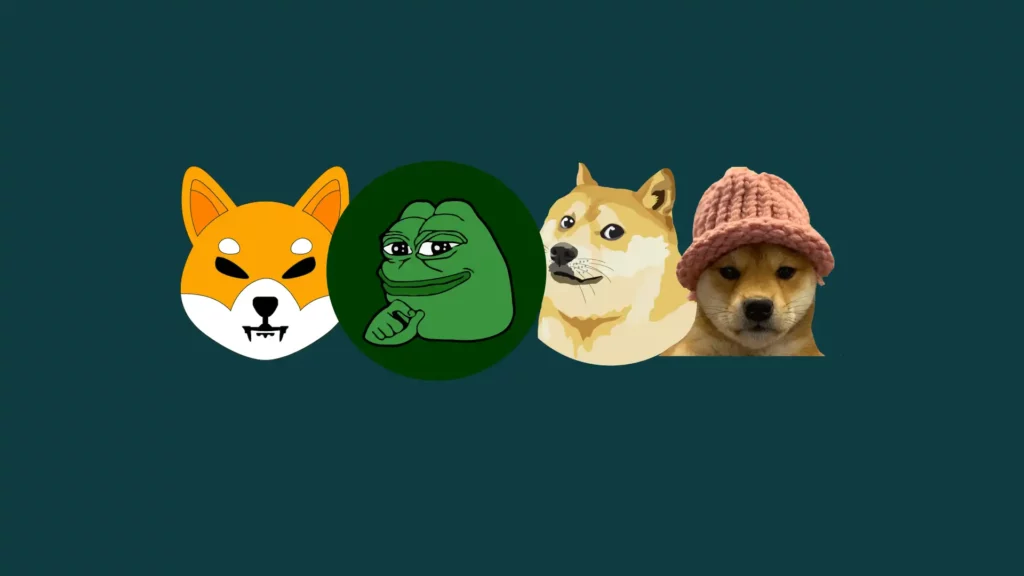
Meme coins are cryptocurrencies whose main appeal is culture and community rather than deep technical utility. They’re built around jokes, characters, trends, or internet lore (think dogs, frogs, politicians, or brand mascots). Prices tend to be driven by hype cycles, social media, and virality more than fundamentals, which makes them super volatile — they can rocket on a wave of attention and crater just as fast. In other words: they’re high-risk, high-noise assets where the “story” (memes, community, celebrity mentions) often matters more than traditional crypto metrics. CoinMarketCap’s glossary frames them in this culture-first bucket, highlighting the speculation and community dynamics that distinguish them from utility coins. CoinMarketCap
A few patterns to know:
- Community > code: Most have simple token contracts; the real engine is a swarm of holders making memes, running raids, and pulling in new buyers.
- Momentum trading: They often run on liquidity bursts; spreads and slippage can be nasty during hype.
- “Fair launch” vibes: Many new ones advertise no presale/dev allocation, trying to reduce obvious rug-pull vectors — though risk never disappears.
- Chain matters: Cheaper, faster chains (notably Solana) lowered launch/trading costs and supercharged the meme-coin factory.
None of this is investment advice. If you dabble, size small, expect whiplash, and never rely on influencers.
Top 10 meme coins by market cap (snapshot)
Source: CoinMarketCap “Memes” category, captured 10 Aug 2025 (Europe/London). Rankings change constantly. CoinMarketCap
| Rank | Name | Ticker | Market Cap (USD) | Primary chain (where it lives/started) |
|---|---|---|---|---|
| 1 | Dogecoin | DOGE | $34.74B | Dogecoin L1 (own chain). CoinMarketCap |
| 2 | Shiba Inu | SHIB | $7.86B | Ethereum (ERC-20). CoinMarketCap |
| 3 | Pepe | PEPE | $5.00B | Ethereum (ERC-20). CoinMarketCap |
| 4 | Pudgy Penguins | PENGU | $2.41B | Solana (SPL). CoinMarketCap+1 |
| 5 | Bonk | BONK | $2.14B | Solana (SPL). CoinMarketCap |
| 6 | OFFICIAL TRUMP | TRUMP | $1.86B | Solana (SPL). CoinMarketCap |
| 7 | SPX6900 | SPX | $1.73B | Multichain: launched on Ethereum; active on Solana via Wormhole. CoinMarketCapmetamask.ioStealthEX |
| 8 | FLOKI | FLOKI | $1.10B | Ethereum & BNB Chain. CoinMarketCap |
| 9 | Fartcoin | FARTCOIN | $1.07B | Solana (SPL). CoinMarketCap |
| 10 | dogwifhat | WIF | $0.968B | Solana (SPL). CoinMarketCap |
Notes:
• “Primary chain” points to where the token contract actually lives (or first launched). Some are bridged and tradable elsewhere too.
• Market caps and ranks shift minute to minute; treat this as a time-stamped snapshot.
Pump.fun explained (and why it supercharged Solana memes)
What it is: Pump.fun is a launchpad/market for tokens (especially memes) that bakes the early trading mechanics into a bonding curve. Anyone can connect a Solana wallet, upload a name/symbol/art, pay a small fee, and the token goes live immediately — no manual liquidity seeding needed. The price starts low and increases as buys progress along the curve. Pump+1docs.cielo.finance
Bonding curve basics: Instead of starting with a DEX pool, a fixed chunk of supply sits behind a contract-controlled curve. Each buy nudges the price up; sells go the other way. Pump.fun used a step/exponential-style curve so price ratchets as the cap grows. It’s transparent, fast, and (crucially) cheap to interact with on Solana. Medium
Graduation (“69k” lore): Historically on Solana, once a Pump.fun token’s market cap hit ~$69,000, the system would automatically deposit ~$12,000 of liquidity into a DEX (originally Raydium) and burn the LP tokens — making a public pool that’s harder to rug because the protocol owns and locks the liquidity. Multiple industry write-ups and docs reference this threshold and auto-LP behavior. The BlockArtemisDL NewsGate.comBitbond
What changed in 2025: Pump.fun introduced PumpSwap, an in-house DEX for “graduated” tokens. So instead of auto-listing on Raydium, many tokens now graduate onto PumpSwap when the curve completes, keeping the flow on-platform and reducing migration friction/fees. Some coverage still references Raydium because that was the standard flow through 2024. BlocmatesMedium
Why it caught fire:
- Frictionless creation: No writing your own program; a few clicks and you’re live. Pump
- Predictable early price action: The curve gives buyers/sellers a known path vs. chaotic thin liquidity. Medium
- Anti-rug optics: Auto-LP and LP burns at graduation create a perception of safer pools (still risky, just harder to yank liquidity). Artemis
- Culture engine: A public feed of new coins, constant launches, and ultra-low fees drives “casino-like” participation.
Caveats & risks: The same speed and openness invite scams, copycats, and churn. Many coins never graduate; even graduates can implode post-listing. Third-party explainers and community posts emphasize rug risks, manipulation, and the low hit rate. Treat everything there as speculative entertainment unless you’ve done real diligence. Bitbond
Why Solana is the meme-coin factory
Two big reasons: cost and UX. Solana offers low fees and high throughput, making rapid-fire minting and micro-trading feasible. Technically, memecoins on Solana are just SPL tokens (Solana’s standard) minted via the Token Program. The official docs show how straightforward it is to create a mint, mint supply, and enable metadata — all composable with wallets and apps. Solana+3Solana+3Solana+3
Here’s the typical lifecycle for a Solana meme coin:
- Mint a token (SPL): Create a mint account and set decimals/authority. This can be done with CLI or code; the Token Program handles the standard behavior. Solana+1
- Set up accounts & metadata: Create associated token accounts for holders; add name/symbol/icon via metadata standards so wallets display it nicely. Solana
- Get it tradable: Either list on a DEX (Raydium/others) or use a launchpad like Pump.fun to handle the early phase via a bonding curve and then “graduate” to a pool (now often PumpSwap). CoinMarketCapBlocmates
- Community & distribution: Everything after that is social — memes, raids, airdrops, and exchange listings.
TL;DR answers to your asks
- “What are meme coins?” Crypto that runs on culture and virality — ultra-speculative, community-led assets where memes drive demand. CoinMarketCap
- “Top 10 by market cap?” See the table above — pulled from CMC’s meme category (10 Aug 2025). Values and ranks change constantly. CoinMarketCap
- “Explain Pump.fun & Solana meme coins.” Pump.fun lets anyone launch a token on Solana with a bonding curve; when it reaches a threshold (~$69k mcap), it “graduates” — historically to Raydium with ~$12k locked liquidity, now commonly to PumpSwap. Solana’s SPL standard, low fees, and speed make the whole process cheap and fast.
What Are Meme Coins — Updated for 2026
Meme coins are a subset of cryptocurrency whose primary appeal comes not from deep technical utility or revenue-generating protocols, but from internet culture, community enthusiasm, viral memes, and social media hype. Prices tend to move on sentiment and attention rather than traditional fundamentals, so these assets are extremely volatile and unpredictable.
Originally dog-themed jokes like Dogecoin (DOGE) exploded into phenomenon status, and now meme coins range from fun parody projects to meme tokens with attempts at added utility.
📌 How Meme Coins Have Evolved (2024–2026)
📉 Market Size & Shifts
- Meme coin market capitalization surged to record highs (~$150 billion+ in late 2024) but later contracted significantly by late 2025 as investor enthusiasm softened.
- The sector remains a major player in crypto — with top tokens collectively trading billions in volume — though conditions are more mixed and speculative than in peak hype cycles.
📈 New Themes & Trends
In 2025–2026, the meme coin world has begun blending with broader tech and cultural trends, including:
- AI-inspired and “self-improvement” meme tokens, where buzz is tied to narratives beyond pure jokes.
- Solana ecosystem expansion, where low fees and high throughput have made meme-coin creation easier and faster.
🐶 Top Meme Coins Still in Play
Dogecoin (DOGE) — the original meme coin — remains arguably the most recognizable and widely traded meme asset, thanks to decades of social coverage and cultural momentum.
Shiba Inu (SHIB) — built on Ethereum with added community tools like staking and NFTs; still one of the biggest meme ecosystems.
Pepe (PEPE) — a pure meme token that captured retail excitement, often showing dramatic price swings.
Other contenders include tokens like Floki (FLOKI), Bonk (BONK) and various newer projects that blend memes with other narratives.
🆕 Emerging Meme Coin Dynamics
📊 Price Conditions
In early 2026, meme coins broadly experienced selling pressure and cooling momentum, with tokens like DOGE, SHIB, and PEPE struggling to hold recent gains amid lack of new catalysts.
📈 Meme Seasons Still Happen
Even within broader downturns, short-lived spikes and renewed retail interest can push certain meme coins up over short periods — often tied to social media cycles, whale activity, or trends on platforms like X/Twitter.
📊 Predictions & Buzz
Some analyses list meme coins with theoretical upside narratives for 2026, including Dogecoin, Shiba Inu, Pepe, and others — but emphasize these are highly speculative and not guaranteed to reach nominal price targets like “$1.”
🧠 Regulation & Market Perception
A few regulatory developments shape how meme coins are treated:
- The U.S. SEC clarified that most meme coins don’t meet the legal definition of securities — meaning they’re seen as collectibles or entertainment tokens rather than regulated financial products.
This legal clarity may reduce the risk of some litigation — but it also underscores that meme coins generally don’t offer cash flows, equity claims, or business-driven utility — which is part of why they’re so speculative.
🚨 Risks, Fragility & Market Mechanics
Meme coins carry distinct vulnerabilities:
⚠️ High Volatility
Their prices can swing wildly within minutes in response to memes, celebrity mentions, or social sentiment — often without any underlying value changes.
🐋 Whale Influence & Manipulation
Academic research shows meme coin markets are prone to whale dominance, sentiment amplification, and coordinated price manipulation, making them riskier than many utility tokens and blue-chip cryptos.
🚨 Rug Pulls & Scams
Because launch barriers are low — especially on networks like Solana — many meme coins are created by anonymous teams with little accountability, and some projects vanish or collapse after initial hype.
♦️ What’s New and Noteworthy
📊 Meme Coins with Traditional Finance Bridges
The first Dogecoin-focused ETF (DOJE) launched in 2025, offering institutional or regulated exposure to DOGE’s price without holding the token directly.
🪙 Political Meme Coins
Projects like $Trump and other politically linked tokens saw massive early valuations followed by notable crashes, highlighting both explosive upside and rapid downside risk.
🆕 Next-Gen Meme Projects
Some new meme tokens aim to go beyond jokes by integrating technical improvements like low fees and dedicated launch platforms (e.g., Layer-2 meme-oriented chains), potentially making them more robust than classic memecoins.
🧩 TL;DR — Meme Coin Reality Check
What they are:
- Culture- and community-driven tokens fueled by memes, social media, and viral narratives.
Why people buy them:
- Speculation for high returns
- Community belonging and retail FOMO
- Buzz from influencers and platforms
What they really are:
- Highly volatile, often lacking traditional fundamentals
- Easy to launch and easy to dump — risk of manipulation
- Not securities in most jurisdictions — no legal protections
Investor guide:
- Treat meme coins like very high-risk speculative assets, not stable investments
- Understand community sentiment, liquidity, and wallet concentration
- Never invest more than you can afford to lose
